Informing Today, Inspiring Tomorrow

Informing Today, Inspiring Tomorrow
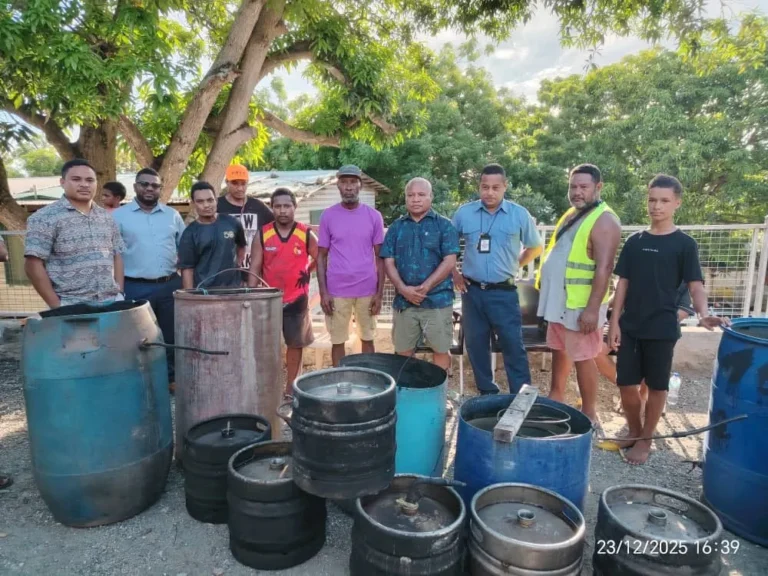
Members of the community with Hon. Russell Simon Wavik (4th from right), Chairman of the Motu Koita Assembly, with their brewing equipment. Source: Motu Koita Assembly
Turning the Tide: Hanuabada Homebrew Makers Surrender Equipment in Landmark Community Shift
Understanding Motu Koita
The Motu Koita Constituency is home to the indigenous Motu and Koita people, the original landowners of Papua New Guinea’s capital, Port Moresby. Established by statute, the Motu Koita Assembly (MKA) serves as the representative body mandated to safeguard the social, cultural, and economic interests of these communities within the National Capital District.
The constituency is divided into two regions, Motu Koita West and Motu Koita East. In the west are some of the capital’s largest and most historically significant villages, including Hanuabada, Elevala, Tatana, and Baruni. To the east, the villages of Kira Kira, Mahuru, Pari, Vabukori, and Korobosea form the heart of Motu Koita East. Together, these communities represent a proud and resilient population widely recognised as the traditional custodians of Port Moresby.
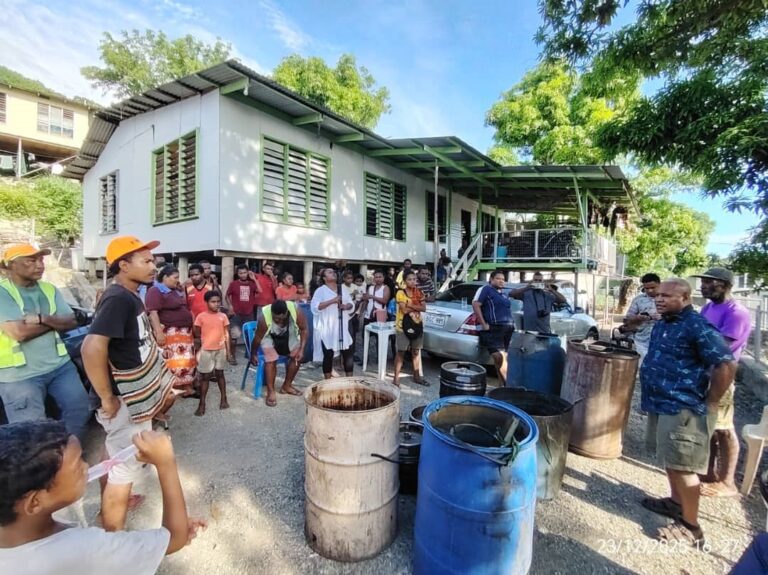
Hon. Russell Simon Wavik, Chairman of the MKA, addressing the community. Source: MKA
.A Community at a Crossroads
In a significant and symbolic moment for Hanuabada village, more than ten individuals involved in the production of homebrew voluntarily surrendered their distillation equipment, responding to a community-led initiative spearheaded by the Motu Koita Assembly.
The exercise, conducted just before Christmas, marks a turning point in efforts to curb illegal alcohol production and restore community wellbeing across Motu Koita villages. It reflects a growing willingness among residents to confront long-standing social challenges through collective responsibility rather than enforcement alone.
The initiative was led by Hon. Russell Simon Wavik, Chairman of the Motu Koita Assembly, who described the handover as the beginning of a new chapter for Hanuabada.
“For far too long, Hanuabada has carried the burden of being labelled the centre of homebrew production,” Chairman Hon. Wavik said during the handover. “Today, we begin to rewrite that narrative. I commend those who surrendered their equipment. It takes courage and a genuine willingness to change.”
While acknowledging the economic pressures that drive some residents toward illicit alcohol production as a source of income, Chairman Hon. Wavik emphasised that the Assembly’s approach is rooted in support rather than condemnation.
“We are not here to punish people,” he said. “We are here to support them. Our focus is on creating viable alternatives, skills training, SME opportunities, and community-based programs that restore dignity and provide real pathways forward.”
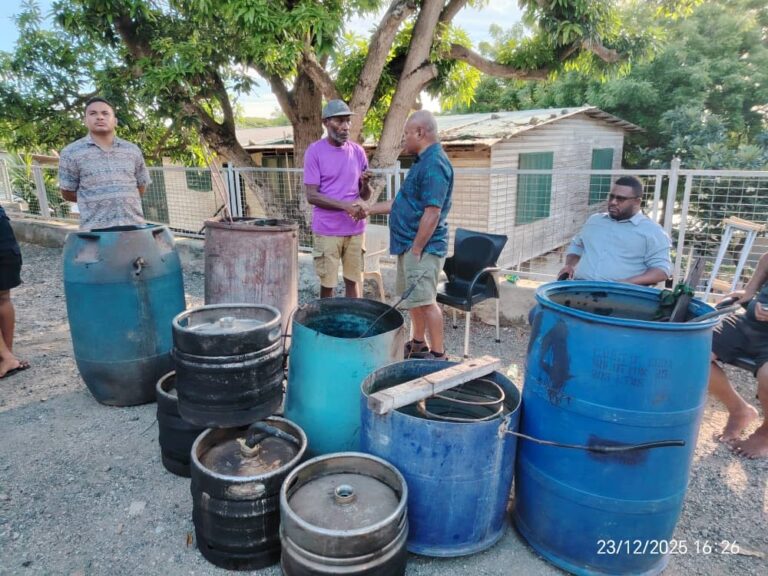
Hon. Russell Simon Wavik, Chairman of the MKA and a community member confirming the deal. Source: MKA.
Restoring Pride and Opportunity
MKA Manager Mr Hendry Toua described the moment as one of renewed hope for the community.
“This is not just about removing illegal equipment,” Mr. Toua said. “It’s about restoring pride in our people and providing the right environment for change. The MKA is actively working with partners to ensure alternatives are available.”
One of the individuals who surrendered his equipment, a 53-year-old resident, said the decision was difficult but was influenced by the Chairman’s personal involvement and the Assembly’s willingness to listen.
The Motu Koita Assembly believes that this leadership-driven, empathetic approach, underpinned by long-term planning, has the potential to set a new standard for reform, not only in Hanuabada but across all Motu Koita communities.
“This is just the beginning,” Chairman Hon. Wavik said. “When we stand together as a community, real change is possible.”