Informing Today, Inspiring Tomorrow

Informing Today, Inspiring Tomorrow
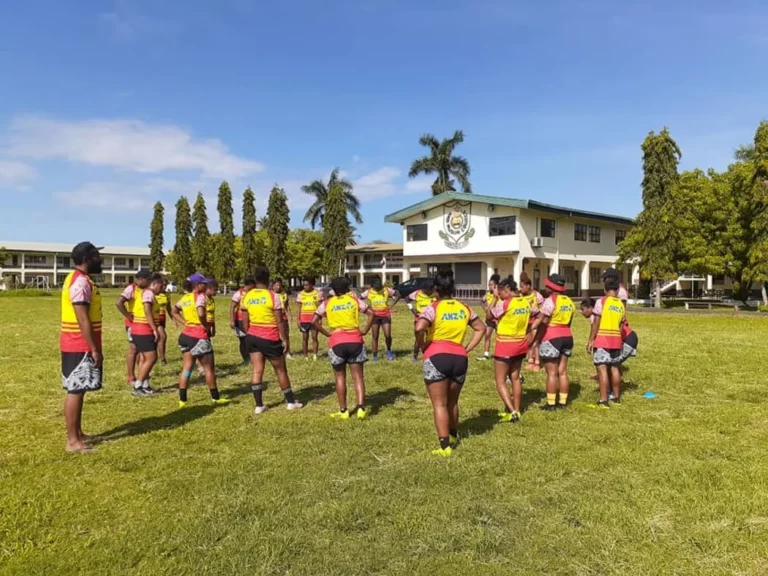
Source: Facebook Rugby PNG
Papua New Guinea: The Sleeping Giant of Rugby Union
For decades, rugby league has been the heartbeat of Papua New Guinea. It is the country’s national sport, woven into everyday life from the Highlands to the coast, from village fields to packed stadiums in Port Moresby. Yet recent results on the international stage suggest a bigger question is worth asking: if Papua New Guinea can compete in rugby league among the best nations in the sport, could it also become a powerhouse in rugby union?
The answer, many believe, is yes, and perhaps even more emphatically than Fiji, long regarded as the Pacific Island’s gold standard in rugby union.
Fiji’s Blueprint: A Pacific Powerhouse Built on Vision
Fiji’s rise in rugby union offers a powerful case study. Despite a population of under one million, Fiji is ranked inside the world’s top ten in men’s 15-a-side rugby and is universally regarded as the global benchmark in sevens rugby. The country has won two Olympic gold medals and one silver, three World Rugby Sevens Series titles, and has won the Hong Kong Sevens a record 19 times, long regarded as the benchmark tournament in sevens rugby. The Hong Kong Sevens existed long before rugby sevens was introduced to the Olympics and World Cup, and Fiji has consistently produced a steady stream of elite professionals playing in England, France, Scotland, Australia, Japan, the United States and New Zealand.
This success did not happen by chance. Fiji invested in human resources with technical support from World Rugby, built a clear pathway from schools to elite rugby, and allowed players to earn professional contracts overseas while sending experience, income and prestige back home. Rugby union became not only a sport, but a national industry.
The introduction of a professional rugby union club, the Fijian Drua, competing in Super Rugby against teams from Australia and New Zealand, has lifted the standard of Fiji’s domestic game and contributed to Fiji’s rise to eighth in the world rankings for 15-a-side rugby. With Papua New Guinea entering Australia’s National Rugby League competition in 2028, PNG can study Fiji’s example and the impact professional rugby union has had on Fiji’s development.
Under the leadership of its new chairman, John Sanday, a former national rugby union representative and businessman, Fiji Rugby Union has shifted towards a more corporate and strategic focus. Sanday’s visionary leadership has increased the union’s visibility through digital platforms, including its website and social media. The union is also tightening policies to protect and strengthen professional pathways for elite players pursuing careers overseas, while exploring investment in a 25,000-seat stadium to attract international matches to Fiji.
Icons Who Built the Brand
One only has to watch or search online for players such as Jiuta Wainiqolo, now starring for Lyon in France, or Semi Radradra, a rare athlete who excelled at the highest level in both rugby league and rugby union. Radradra represented Australia in rugby league and Fiji in both rugby league and union, becoming a global superstar and earning top-tier contracts in France, England and Japan.
Another iconic figure is Rupeni Caucaunibuca, the former Auckland Blues player who represented Fiji internationally and enjoyed a successful professional career in France. Coming from a village background, he became a national hero and cultural icon in Fiji, even appearing in a Nike global advertising campaign alongside some of the world’s biggest rugby stars, the only Fijian to do so.
Then there is Waisale Serevi, widely regarded as the greatest sevens rugby player of all time. Serevi played professional 15-a-side rugby in England, Japan and France, coached Papua New Guinea’s national sevens team in 2009, and remains one of the few individuals to have won World Rugby Sevens Series titles both as a player and as a coach for Fiji in 2005.
PNG Has Already Produced Its Own Stars
Papua New Guinea has also produced elite talent across both rugby codes. Will Genia, born in Port Moresby, became one of the world’s leading scrum-halves, earning more than 100 Test caps for Australia in rugby union.
In rugby league, PNG legends include Marcus Bai and Justin Olam. Bai played at the highest professional level, representing the PNG Kumuls and competing in Australia’s National Rugby League with the Melbourne Storm, as well as in the United Kingdom with Hull FC, Leeds Rhinos and Bradford Bulls. Justin Olam rose from the local PNG Hunters system before earning a breakthrough contract with the Melbourne Storm and later finishing his career with the Wests Tigers.
Fiji’s rugby stars can be compared to America’s basketball icons such as Michael Jordan, Magic Johnson, Charles Barkley, Larry Bird and the late Kobe Bryant. Papua New Guinea has the potential for its rugby athletes to reach similar iconic status on the global stage.
PNG’s Untapped Advantage: Scale, Strength and Numbers
Papua New Guinea possesses several advantages that Fiji does not. With a population of more than 10 million, PNG has by far the largest player base in the Pacific Islands. It also has a bigger economy, a larger domestic market, and significantly greater potential to attract business-house sponsorship if rugby union is structured and governed professionally.
Where Fiji consistently produces world-class players from a relatively small population, PNG could do the same from a vastly larger talent pool. PNG athletes are widely known for their natural power, speed, endurance and flair, attributes that translate exceptionally well to modern rugby union, particularly in the loose forwards, midfield and back-three positions.
Rugby League as Proof of Concept
Papua New Guinea does not need to imagine what sporting dominance looks like, it is already experiencing it in rugby league.
In November 2025, the PNG Kumuls defeated the Fiji Bati 50–18 in Port Moresby to claim their third consecutive Pacific Bowl title, completing a three-year run of dominance over Fiji. This was not a weakened Fijian side. Fiji fielded a team stacked with NRL-experienced players, yet PNG overwhelmed them with intensity, fitness and cohesion.
PNG scored eight tries, completed sets at a higher rate, broke more tackles, made more line breaks, and defended with far greater discipline. This dominance demonstrates that when PNG is organised, properly resourced and unified, it can outplay any nation at the highest level of a major rugby code.
If PNG Took Rugby Union Seriously
Now imagine that same level of seriousness applied to rugby union.
If PNG rugby union were given sustained financial backing, structured academy systems for youth development, technical support from World Rugby, clear domestic and international pathways, and professional governance and administration, the results could be transformational.
Rugby union rewards physicality, endurance and creativity, qualities PNG athletes possess in abundance. With academies established across regions, PNG could develop players from school level through to professional readiness, creating a “factory” of rugby union talent similar to Fiji’s, but on a much larger scale.
The NRL Effect and a Missed Opportunity
By 2028, Papua New Guinea is expected to receive around 600 million in support to establish an NRL franchise. This investment will significantly lift standards in coaching, conditioning, sports science, player welfare and management.
The key question is what happens if a similar level of long-term investment is made in rugby union.
The infrastructure, professionalism and global exposure generated by an NRL team will raise expectations across all sports. If rugby union can ride that wave rather than be overshadowed by it, PNG could produce elite union players capable of competing in Europe, Australia, New Zealand and Japan.
Economic Returns Beyond the Field
Fiji’s rugby union success has created national icons, foreign earnings, remittances and global visibility. Its players are superstars at home, earning significant incomes overseas while contributing financially to families and communities.
Papua New Guinea could replicate, and potentially surpass, this model. A strong rugby union export pipeline would bring foreign currency into the PNG economy, enhance international visibility, and provide life-changing opportunities for young athletes who might otherwise be lost to another sport or may not play the sport due to financial circumstances.
A Question of Will, Not Talent
The talent exists.
The population exists.
The passion exists.
The proof already exists.
What remains is intent.
If Papua New Guinea commits to rugby union with the same seriousness it gives rugby league, backed by sound governance, funding and international support, it has every ingredient needed to become not just competitive, but dominant in the Pacific and respected globally.
Fiji has shown what is possible with vision and structure. Papua New Guinea has the scale, strength and hunger to go even further.
The sleeping giant is already stirring. The only question left is whether rugby union is ready to wake it.