Informing Today, Inspiring Tomorrow

Informing Today, Inspiring Tomorrow
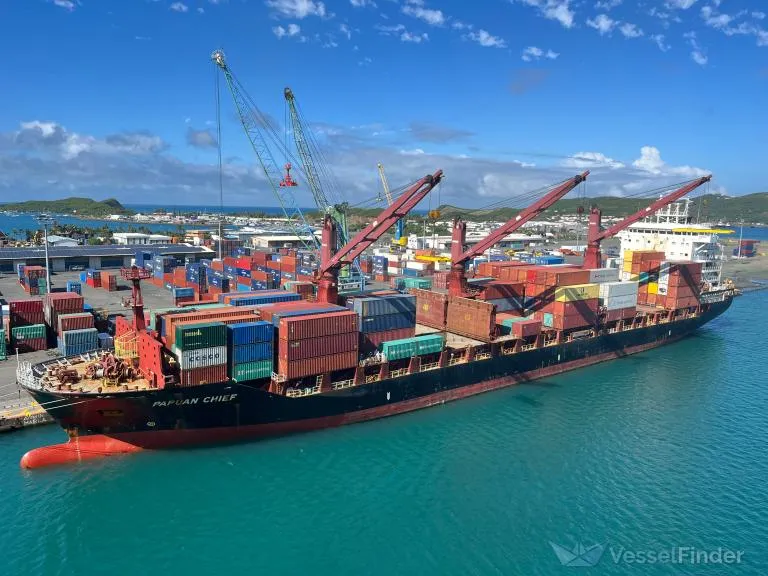
Papua New Guinea’s Case for Investing in an International Trading Vessel
Papua New Guinea is the largest economy in the Pacific Islands region, yet it remains almost entirely dependent on foreign-owned shipping lines to move its exports and imports. This dependence exists despite PNG’s substantial trade volumes, diverse export base and geographic position between Asia and the Pacific. As global shipping continues to consolidate under a small number of multinational operators, the strategic case for PNG to invest in an internationally trading vessel has become increasingly clear.
In 2024, according to the World Bank Report, PNG’s gross domestic product was worth US$32.54 billion, making it the largest GDP among Pacific Island countries. The Observatory of Economic Complexity in 2023 valued merchandise exports at US$12.5 billion, and imports were valued at US$5.3 billion, resulting in a sustained trade surplus driven primarily by resource exports.
Despite this scale, PNG owns no internationally trading liner vessels serving its export and import trade.
Global Shipping Is Controlled by a Few Powerful Players
International containerised trade is dominated by a small group of global shipping lines. These include Maersk, MSC, CMA-CGM, COSCO Shipping, Hapag-Lloyd and Ocean Network Express, alongside a small number of other operators. Together, these companies control the majority of global container capacity, vessel deployment, freight pricing structures and service routes.
In the Pacific Islands trade route, Swire Shipping, Matson, Carpenters Shipping and Neptune Pacific Direct Line are among the active competitors. Some of these operators act as agents for global shipping lines, allowing them to offer wider international reach. These organisations service Australia, New Zealand and Singapore into and from Pacific Island countries, either directly or via New Zealand as a transhipment hub, to move cargo to and from Asia, the United States and Europe.
Countries such as PNG have little influence over:
-
- Freight rates
-
- Schedules
-
- Vessel frequency
-
- Equipment availability
-
- Port calls
-
- Service reliability
This structural imbalance leaves PNG as a price-taker rather than a price-maker in global trade. Liner shipping operates within a competitive market structure where pricing is influenced by market forces. However, each shipping line has a different cost structure, and freight rates across competing trade routes are not uniform. Other factors influencing customer decisions and freight rates include schedules, transit time, frequency, operational and fixed costs, equipment type and availability, and overall service reliability.
PNG’s Proximity to Asia and the Pacific
One of PNG’s strongest advantages is its geographic location at the crossroads of Asia and the Pacific. The country lies just south of Southeast Asia, north of Australia and on the western edge of the Pacific Islands region. PNG shares a land border with Indonesia and is positioned close to major Asia–Australia shipping lanes, among the busiest maritime corridors in the world.
This makes PNG a natural gateway between Asia, Australia and the Pacific Islands. Both Port Moresby and Lae are well located and equipped to handle feeder services into the islands and connections to global markets.
This strategic positioning allows PNG to function as a potential transhipment hub. Cargo from China, Japan, South Korea and Singapore is around 15 to 30 days sailing time from PNG depending on the route, with onward movement possible into Pacific Island markets, Australia and New Zealand. Any shipping line operating on this route must fully understand the trade dynamics and cost structures involved, particularly when competing with established transhipment hubs in Singapore and New Zealand.
PNG’s location enables it to:
-
- Serve as a regional transhipment and logistics hub
-
- Connect Pacific Island exports to Asian markets more efficiently
-
- Reduce sailing times and fuel costs compared to more distant hubs
-
- Strengthen trade integration between Asia and the Pacific Islands
New Zealand has traditionally been the dominant transhipment hub for Asia–Pacific Island trade. However, congestion and rising port charges have affected operations. Recently, global shipping company Maersk imposed congestion fees on all exports, imports and coastal containers between Lyttleton and other New Zealand ports, citing slow cargo operations that extended vessel turnaround times and increased operating costs passed on to customers.
This presents an opportunity for PNG Ports to position itself as a cost-effective alternative, using its geographic advantage to attract shipping lines and potentially relieve congestion at other regional hub ports.
Terminal Handling Operators
Since South Pacific International Container Terminal (SPICT) assumed control of terminal operations at PNG Ports, there has been a significant improvement in operational performance. Investments in equipment and workforce capability have enabled the use of post-Panamax ship-to-shore cranes capable of servicing gearless vessels of up to 6,000 TEU.
Recent vessel calls highlight this capability. The gearless vessel Kota Gabung, with a capacity of 2,754 TEU, called at both Lae and Motukea in November. Earlier in the year, CMA CGM Perth, with a capacity exceeding 4,000 TEU and an overall length of 261 metres, became the longest vessel to call at a PNG port.
Recently, PNG Ports Corporation Ltd announced that both the Port of Moresby and the Port of Lae have recorded significant improvements in their global rankings in the 2025 World Bank Container Port Performance Index (CPPI), outperforming several ports in developed economies, including Melbourne, Brisbane, Port Botany (Sydney), Auckland, Napier and Otago. According to the report, Port Moresby improved its ranking from 280th to 248th, while Lae advanced from 311th in 2023 to 264th in 2025. The CPPI, jointly produced by the World Bank and S&P Global Market Intelligence, assesses more than 400 container ports worldwide, measuring performance based on vessel time in port and container throughput. Since its introduction in 2020, the index has become a widely recognised benchmark for evaluating global container port performance.
George Gware, COO of ICTSI South Pacific, highlighted, “This improvement demonstrates the impact of strategic investment in equipment, systems, and operational efficiency. Our recent investments in new gantry cranes, yard equipment, and advanced port management systems have contributed to faster vessel turnaround times and improved cargo handling efficiency.”
MSG – Melanesian Spearhead Group
The regional trade environment further strengthens PNG’s position. The Melanesian Spearhead Group operates under the Melanesian Free Trade Agreement, facilitating trade in goods, services and labour mobility among PNG, Fiji, Solomon Islands and Vanuatu. This framework has already supported increased trade flows within Melanesia and provides a foundation for shipping services aligned with regional trade patterns and rules of origin.
Business Models for Establishing a National or Regional Shipping Line
Starting a shipping line is highly capital-intensive, requiring investment running into hundreds of millions of dollars. Core assets include vessels, container yard, containers, IT systems and working capital, while ongoing operations demand experienced management, crewing, fuel, procurement, maintenance, dry-docking and compliance with international maritime regulations. Because of these high barriers to entry, most new shipping lines are not established without state backing, strategic investors or partnerships. Historical examples such as Pacific Forum Line show that early years often involve losses before scale, network stability and commercial discipline deliver returns.
One proven approach is a public–private partnership (PPP) model. Under this structure, the PNG Government could provide political backing, seed capital and strategic direction, while private-sector operators manage day-to-day operations. The government would remain a shareholder and receive dividends, while operational control sits with professionals who have shipping expertise. Similar structures are common in ports, airlines and utilities globally.
The choice of partner is critical. PNG could pursue a strategic partnership with a global shipping line, both of which have the scale, networks and technical expertise to integrate a Pacific-focused service into global trade lanes. Alternatively, PNG could pursue a regional ownership model through the Melanesian Spearhead Group, allowing Pacific Island nations to retain control while sharing risk, cargo volumes and governance. Historically, regional models prioritise island interests and service reliability, while global partnerships prioritise scale and competitiveness. The optimal structure may combine both: regional ownership with global operational alliances, balancing sovereignty with commercial viability.
Another option is buying into an existing shipping line. This provides immediate access to vessels, established routes, management expertise, IT systems and customer networks, reducing execution risk and avoiding lengthy start-up periods. However, equity participation often limits control over strategic decisions such as port calls, pricing and fleet deployment. Returns are also exposed to global shipping cycles, making this approach more suitable as a complementary strategy rather than a complete solution.
Pacific Forum Line: A Proven Regional Model
Pacific Forum Line was formed in 1978 by 12 Pacific Forum countries, including Papua New Guinea, to ensure reliable shipping services and prevent monopolistic control of island trade. While the company operated at a loss for many years, it became profitable by the late 1980s and 1990s and began paying dividends.
Over time, member countries sold their shares. The Government of Samoa acquired full ownership before selling a 50 percent stake to Neptune Pacific Direct Line in 2013. PFL continues to operate as a Pacific-focused shipping entity, and PNG’s role as a founding shareholder remains one of the strongest regional examples of shipping as a development tool rather than purely a commercial venture.
The True Cost of Running a Shipping Line
Operating a shipping line involves substantial ongoing costs, including:
Shipboard costs
-
- Crew wages and benefits
-
- Fuel and lubricants
-
- Stores and provisions
-
- Insurance
-
- Maintenance and repairs
-
- Dry-docking
-
- Classification and regulatory compliance
Port and voyage costs
-
- Port charges and berth fees
-
- Pilotage and towage
-
- Canal fees where applicable
-
- Stevedoring and terminal handling
Landside capability
-
- Dedicated container terminals or leased terminal space
-
- Container yards for 20ft and 40ft dry containers
-
- Reefer storage with sufficient plug-in points
-
- Container repair bays
-
- Wash bays and inspection areas
Containers are typically leased from manufacturers, most commonly in China, rather than purchased outright during early operations due to high capital costs. Vessels can be chartered to avoid the high cost of purchasing it outright. Some of these value-adde activities, especially, infrastructure investment can be outsourced during the early stages to reduce start-up costs.
IT Systems and Commercial Sustainability
Modern shipping operations require robust IT systems for yard management, gate-in and gate-out control, container tracking, reefer monitoring, damage container recording, repair billing, freight invoicing and customer reporting. Without these systems, operational inefficiencies quickly erode margins.
A PNG shipping line would also require strong commercial capability, including a dedicated sales and marketing team, competitive freight pricing, long-term contracts with exporters and importers, and strategic alliances with global carriers for onward connectivity.
Strategic, Not Speculative
The history of Pacific Forum Line demonstrates that shipping lines created for regional development do not deliver instant profits, but they can become sustainable when aligned with national trade needs, disciplined governance and professional management.
For Papua New Guinea, the question is not whether shipping is expensive, but whether continued dependence on foreign-controlled logistics carries a higher long-term cost.
PNG already has the cargo, the economy and the regional influence. What it lacks is control over how its trade moves across the oceans.