Informing Today, Inspiring Tomorrow

Informing Today, Inspiring Tomorrow
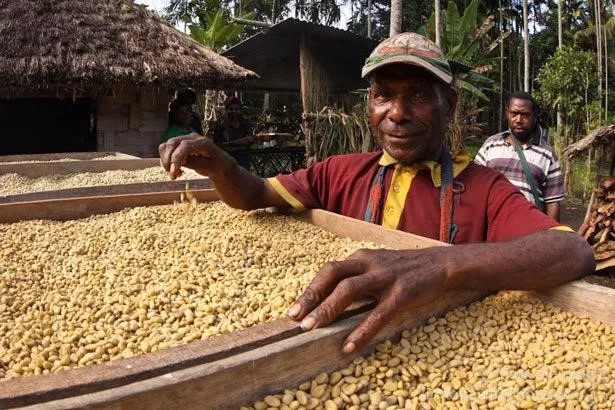
PNG roasted coffee beans. Source: ACIAR.
Papua New Guinea’s Coffee Renaissance
In the mist-clad highlands of Papua New Guinea (PNG), coffee is more than a crop, it is the lifeblood of rural communities, a driver of local economies, and a bridge to global markets. For decades, smallholder farmers have labored on steep slopes, navigating poor infrastructure and logistical challenges, all in the hope that their beans will fetch a fair price.
Recent surges in international coffee prices have brought a rare windfall. Yet, despite this economic boost, long-standing issues, from deteriorating roads to land disputes, remain entrenched, shaping the daily realities of PNG’s coffee-producing communities.
A Storied Beginning
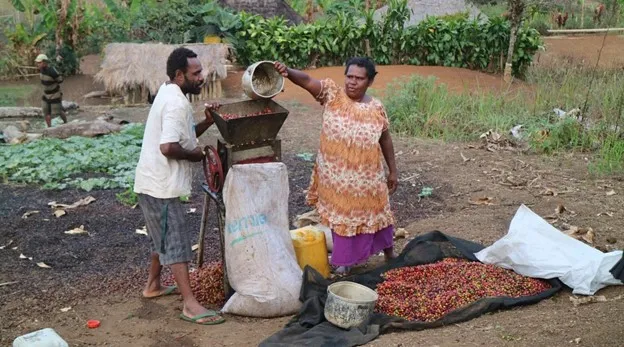
Farmers in Papua New Guinea use a hand pulper to remove the outer skin of coffee cherries. Source: ACIAR.
The history of coffee in PNG stretches back to the late 19th century, during the German colonial era. One of the key figures in its early spread was Emma Coe Forsayth, known as “Queen Emma,” a businesswoman of mixed American and Samoan descent. Along with botanist Richard Parkinson, she helped establish some of the first coffee plantations in the Kokopo district of East New Britain Province. By the 1920s, Arabica coffee sourced from Jamaican Blue Mountain seeds was introduced, helping to cement PNG’s reputation for producing high-quality beans.
Experimental stations in Wau, Morobe Province, played a pivotal role in refining cultivation techniques and preparing coffee for commercial export. Over the decades, coffee became deeply intertwined with the social and economic fabric of PNG’s highlands, providing a source of income, a medium for cultural expression, and a link to the international market.
The Heartbeat of the Highlands
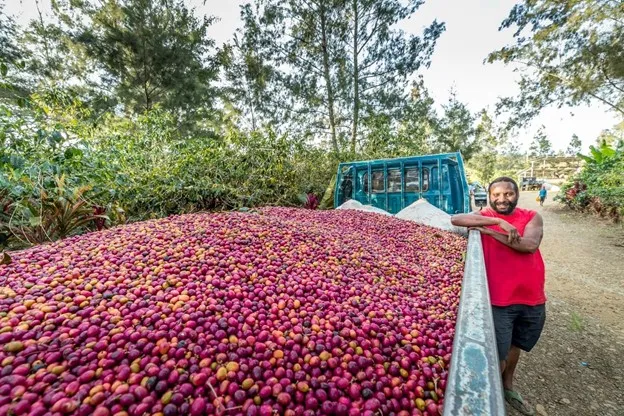
Coffee beans in a truck ready for processing. Source: New Guinea Highlands Centre.
Today, PNG’s coffee industry is concentrated in the highlands provinces: Western Highlands, Eastern Highlands, Simbu, Morobe, and East Sepik. These regions, characterized by fertile volcanic soils, high altitudes, and abundant rainfall, provide ideal conditions for growing Arabica coffee. Roughly 55% of households in these areas engage in coffee cultivation, underscoring its role as both an economic and social cornerstone.
Smallholder farmers dominate the industry, producing about 85% of the nation’s coffee. In 2023, PNG exported approximately 787,000 bags of green coffee, ranking it 17th globally. Despite its relatively modest global share, PNG is Asia’s second-largest producer of washed Arabica coffee, prized for its bright acidity and nuanced flavors.
Coffee cultivation in PNG is rarely just an economic activity; it is part of daily life. Families integrate coffee into their subsistence lifestyle, growing it alongside food crops and using the income to pay for school fees, health care, and cultural obligations.
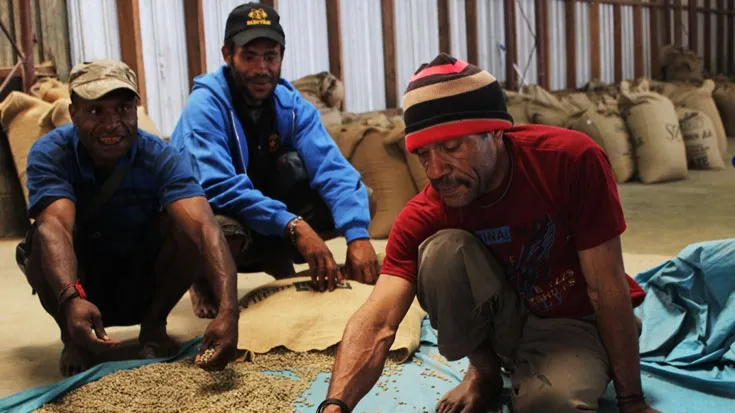
Locals sorting out the coffee beans. Source: World Bank
A Surge in Global Prices
The international coffee market has experienced unprecedented volatility, and PNG farmers are reaping some of the benefits. Between 2024 and early 2025, prices reportedly rose by nearly 90%, driven largely by poor harvests in major coffee-producing nations such as Brazil and Vietnam. Although there has been a slight decline in the June 2025 quarter, prices remain historically high.
This boom has had a direct impact on rural highland households. Farmers have been able to invest in education for their children, improve living standards, and meet social obligations. One community leader from Nivi village in the Eastern Highlands described how coffee income now plays a central role in daily life, from paying school fees to supporting cultural commitments.
The price surge has also stimulated local economies. As farmers spend their earnings on goods and services, wholesale and retail activity receive a boost. ANZ Research forecasts that PNG’s GDP could grow by 4.7% in 2025, fuelled in part by exports of coffee, cocoa, and palm oil. This economic uplift is also helping to address long-standing foreign currency challenges.
The Daily Struggle of Smallholders
Despite the favorable market conditions, the day-to-day life of smallholder farmers remains demanding. In Nivi village, farmers navigate treacherous terrain to transport coffee to buyers. Some walk four hours carrying 40-kilogram bags to reach the nearest truck stop, often after heavy rainfall has made the paths nearly impassable.
Local community leaders have voiced concerns that, while they generate significant economic value, government support is insufficient. Many smallholders feel that the challenges they face, poor roads, limited access to finance, and a lack of modern farming tools, remain largely unaddressed. The windfall from high coffee prices, while welcome, cannot solve these structural issues alone.
Government and International Interventions
Recognizing these challenges, the PNG government has partnered with international organizations, including the World Bank, to support the coffee sector. The PNG Agriculture Commercialization and Diversification (PACD) Project, administered by the Coffee Industry Corporation (CIC), is a multi-million-kina initiative designed to enhance productivity, strengthen market access, and support farmers directly.
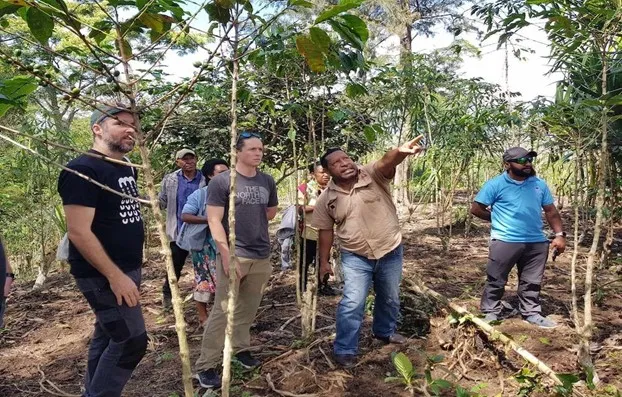
Researchers/Stakeholders discussing coffee agroforestry systems in Kabiufa, near Goroka, PNG. Carbon Trading, a method to efficiently use natural resources to better manage coffee farms. Source: Sustineo.

Mr Penias holding the signed contract with Mr Aba (left) and Mr Kanekunga as Mr Apinas looks on. Kaia Works Secures K4.8 million Contract with the PNG Government for Key Coffee Road Rehabilitation in Chimbu. Source: Write Stuff PNG.
Officials overseeing PACD emphasize that poor road infrastructure is the largest barrier to achieving high export volumes. Experienced project coordinators have stressed that policymakers in urban centers often lack a clear understanding of village realities, underscoring the importance of field engagement. Past initiatives, such as “coffee roads” built six years ago, have demonstrated that even small improvements in transport infrastructure can drastically reduce costs and time for farmers.
PACD support includes distribution of high-quality coffee seedlings to replace aging trees, provision of pruning tools and drying canvases, and construction of storage and wet-processing facilities. These interventions aim to improve both yield and quality, allowing farmers to earn more from international markets.
Private Sector Innovation: The Case of Las Malo
Private processors are also adapting to PNG’s changing coffee landscape. In Goroka, Las Malo, a family-owned processing company, recently installed an electronic color sorter that automates bean selection, significantly boosting production while reducing manual labor. The company purchases beans directly from smallholders and has contributed millions of kina in taxes since 2019.
Despite this innovation, the vast majority of PNG coffee still comes from customary land. Unlike the state-owned plantations of the mid-20th century, today’s growers operate on land governed by complex traditional ownership, sometimes subject to disputes lasting decades. These legal and social complexities present ongoing challenges for investment and expansion.
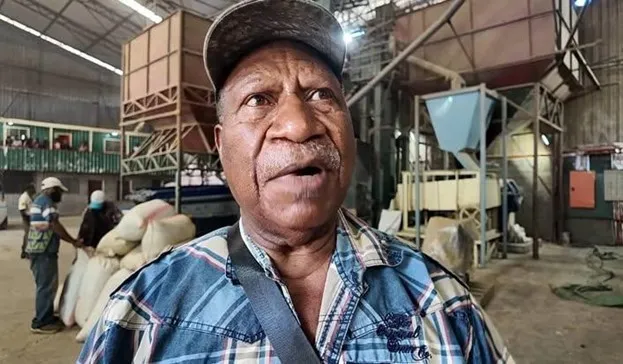
Ken Dumudi, Director of Lass Malo Coffee (LMC). Source: PNGHausBung.
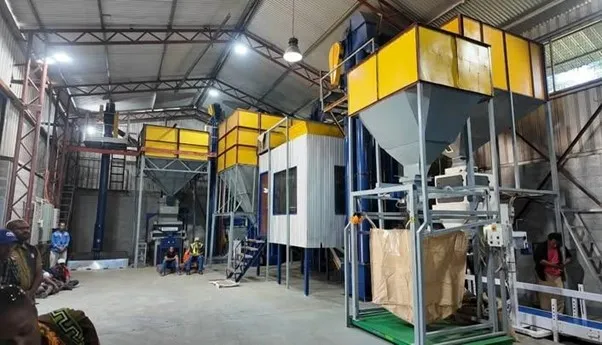
Las Malo Coffee Colour Sorter. Source: PNGHausBung.
Social Impact and Community Building
Coffee initiatives are fostering more than economic growth—they are promoting social cohesion and empowerment. For example, women’s associations in the highlands have received funding to establish nurseries, wet-processing centers, and training facilities. These projects not only improve production but also strengthen relationships in areas previously affected by tribal conflict.
By creating tangible benefits for communities, these interventions demonstrate how agriculture can be a tool for reconciliation and empowerment, bridging divides and enabling sustainable development.
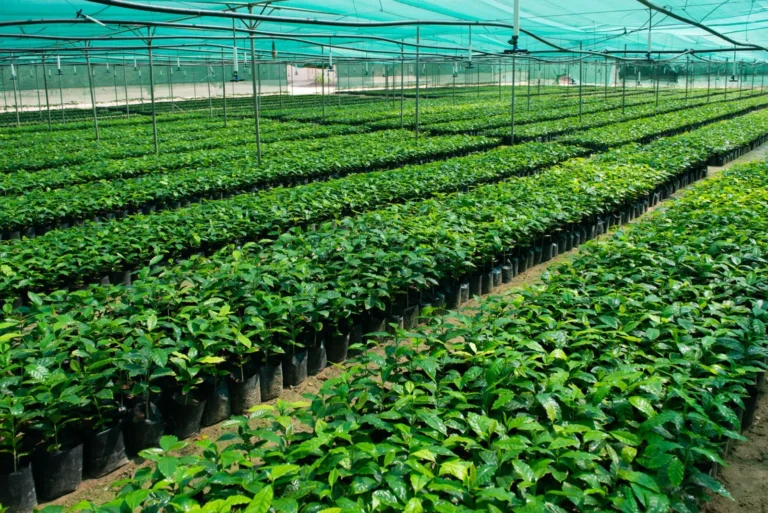
A nursery for coffee plants. Source: Jazan Mountains Development Authority/The Saudi Times.
Regional Profiles: Stories from the Highlands
Eastern Highlands: Farmers in Nivi village produce around 5,000 bags annually despite difficult terrain. The recent price surge has enabled them to invest in school fees, home improvements, and cultural obligations, although road access remains a major challenge.
Chimbu Province: The PACD project has distributed thousands of seedlings to smallholder farmers, helping revitalize aging trees and improve yields. Local training centers have also been established to teach modern farming and post-harvest techniques.
Goroka: Las Malo’s adoption of high-tech processing illustrates the potential of private sector innovation to complement government initiatives, boosting productivity while supporting smallholder livelihoods.
Future Prospects for PNG’s Coffee Industry
While elevated prices offer a rare economic boom, long-term prosperity for PNG’s coffee sector depends on addressing structural challenges. Investment in transport infrastructure, resolution of land disputes, and expansion of support programs for farmers remain critical.
Sustained high prices alone are insufficient. Capacity-building, market access, and modernization of processing techniques are necessary to ensure that smallholders capture a fair share of global coffee revenue. With these measures, PNG’s coffee industry has the potential to transform short-term windfalls into enduring social and economic gains.
Papua New Guinea’s coffee industry is a study in resilience, opportunity, and complexity. Its historical legacy, fertile highlands, and recent surge in international prices create a unique moment for growth. Yet systemic challenges, poor roads, land ownership disputes, and limited access to modern technology, temper optimism.
Reported accounts from farmers and project coordinators indicate cautious hope: while current market conditions are favorable, sustained prosperity will require coordinated investment, policy support, and long-term commitment.
For PNG’s highland communities, coffee remains more than a crop, it is a lifeline, a source of social cohesion, and a pathway to opportunity.
PNG Coffee at a Glance
Key Statistics (2025)
- Total Exports: 787,000 bags of green coffee
- Global Rank: 17th in production
- Asia’s Washed Arabica Producer: 2nd, behind Indonesia
- Smallholder Contribution: 85% of total coffee
- Highland Household Participation: 55% of households in Western Highlands, Eastern Highlands, Simbu, Morobe, and East Sepik
- GDP Impact: Coffee, cocoa, and palm oil exports expected to boost GDP growth to 4.7%
Note: This article was first produced in the September, 2025 edition of the Niugini Review Magazine. Click below for the publication.