Informing Today, Inspiring Tomorrow

Informing Today, Inspiring Tomorrow
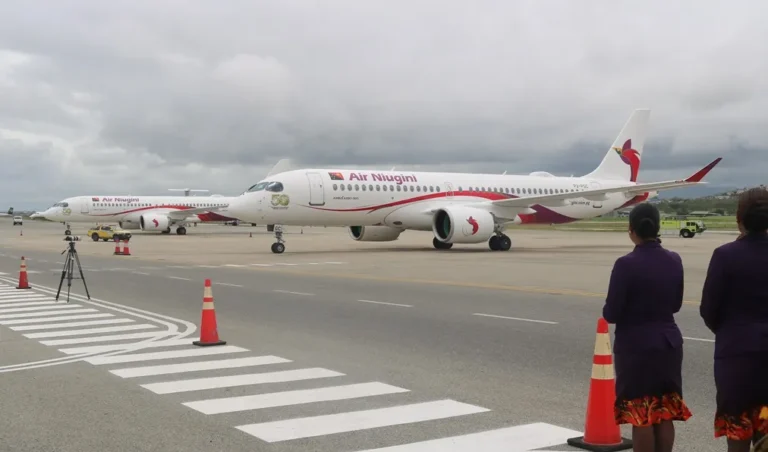
Source: Air Niugini
Airline Industry at a Crossroads: New Aircraft, Old Constraints and Hope for the Future
Papua New Guinea’s airline industry is undergoing a period of significant transition, marked by long-awaited fleet renewal for its major carriers and renewed optimism about aviation’s role in supporting economic growth and tourism. At the same time, persistent infrastructure shortcomings and ongoing flight disruptions continue to frustrate passengers and test the capacity of the aviation system.
At the centre of this transition is Air Niugini, the national flag carrier that operates both domestic and international services. The airline is progressively retiring ageing aircraft and introducing modern jets, while PNG Air is strengthening domestic connectivity through fleet expansion. These developments come at a critical moment, as reliable air travel remains essential in a country where rugged terrain and limited road access make aviation the backbone of national transport.
A Historic Milestone: Air Niugini’s Airbus A220 Rollout
In September 2025, Air Niugini took delivery of its first Airbus A220-300, marking a major milestone in its long-running fleet modernisation programme. The aircraft, branded The People’s Balus, signalled a shift away from ageing Fokker jets and promised improved reliability and passenger comfort. The first A220 entered commercial service on 4 October 2025, operating the Port Moresby–Lae route and echoing Air Niugini’s inaugural flight in 1973.
That momentum continued in December, when Air Niugini welcomed its second A220-300, registered P2-PGB, to Port Moresby. The aircraft arrived at Jacksons International Airport on 12 December 2025 after flying from Montreal via Vancouver, Honolulu and Fiji, and was greeted with a traditional water salute at the APEC Terminal. The arrival was witnessed by the Minister for State-Owned Enterprises, Hon. William Duma, senior government officials, foreign dignitaries, members of the Air Niugini Board, management and staff.
Welcoming the second A220, Minister Duma said:
“After decades of ‘just getting by,’ our National Flag Carrier is now in the position to keep moving in the right direction. The arrival of this aircraft is a proud achievement for our nation and a clear sign of the Government’s unwavering commitment to modernise and strengthen our national airline.”
Demonstrates the Government’s commitment to strengthening the national carrier, noting that the growing A220 fleet was already easing pressure on ageing aircraft and improving operational performance. Air Niugini Chairman Karl Yalo said the A220 represented a long-term solution to reliability challenges, offering greater comfort, efficiency and suitability for Papua New Guinea’s terrain.
Just days later, Air Niugini welcomed its third brand-new A220-300, registered P2-PGC, which arrived in Port Moresby on Thursday, 18 December 2025. The aircraft was captained by Air Niugini’s Captain Beverly Paki, alongside Airbus pilot Captain Thomas Oberreiter, with Air Niugini Captain Joachim Ortlauf observing. Once again, the aircraft was greeted with a water salute and blessing, marking another step forward in the airline’s modernisation drive.
According to fleet plans, Air Niugini will continue to take delivery of additional A220 aircraft through 2026, 2027 and 2029, gradually increasing passenger capacity and operational flexibility as older aircraft are phased out.
PNG Air Strengthens Domestic Connectivity
While Air Niugini focuses on jet fleet renewal, PNG Air continues to expand its domestic capability through the introduction of new ATR 72-600 aircraft. The turboprops are well suited to PNG’s varied airstrips and remote routes, helping maintain essential connectivity to regional centres and complementing Air Niugini’s network.
Passengers Speak Out: Frustration Over Cancellations
Despite new aircraft arrivals, PNG’s aviation system continues to struggle with flight reliability, particularly at Port Moresby’s Jacksons International Airport. The National Airports Corporation reported that a total of 36 flights were cancelled at the Domestic Terminal in December, triggering long queues, congested terminals and widespread frustration among travellers.
Local travellers took to social media to express mounting frustration. A post by PNG online news described the situation:
“Now imagine the backlog of passengers stranded after 36 cancelled and disrupted flights,” reflecting the lived experience of passengers dealing with delays and cancellations.
These high cancellation figures echo concerns that were also raised in 2023, when widespread flight disruptions similarly stalled travel plans, particularly during peak periods.
Why Problems Persist: Maintenance and Infrastructure
Officials have emphasised that not all operational issues stem from airline performance alone.
State Enterprises Minister William Duma publicly acknowledged ongoing delays while explaining some causes:
“The lack of airport infrastructure is a problem that has been getting worse as the number of flights have increased but capacity has not kept pace. Air Niugini made it clear in 2011 to the National Airports Corporation that it intended to introduce bigger planes such as Boeing 737s to the fleet and that the strengthening of airport runways was required. But the upgrades did not take place.”
He also stated that he is aware of other issues and attributed the delays to maintenance, indicating that technical issues and aircraft availability remain part of the ongoing challenge.
This reflects a broader point made by both government and airline sources: flight reliability in PNG is shaped by multiple factors, including aircraft age, maintenance, capacity and the physical limitations of PNG’s airports.
Infrastructure challenges persist across major nodes like Jacksons, where runway capacity, parking bays and terminal congestion are all cited as contributors to operational stress, issues that long pre-dated the arrival of new jets.
Issues Facing the Airline
In 2023, then acting Air Niugini chief executive Garry Seddon revealed that around 65 per cent of flight disruptions were technical, with weather, visibility and fuel supply issues also contributing. He highlighted infrastructure shortcomings such as substandard runways and the lack of landing lights at several airports, which limited operating hours and efficiency.
Seddon also pointed to a growing problem with bird strikes, and said repeated runway repairs at Mt Hagen Airport forced the airline to operate smaller aircraft carrying 50 passengers instead of 115, significantly increasing costs and inefficiency. He described the operating environment as “very trying,” noting that staff were often verbally abused by frustrated passengers.
At the time, Air Niugini was operating more than 70 domestic and international flights daily, with 47 per cent on-time performance and about 12 per cent cancelled, while awaiting the return of aircraft from heavy maintenance and the delivery of additional planes.
The Airport City Vision
One of the most ambitious elements of the plan is the proposed Airport City development, a long-term project valued at between K3 billion and K4 billion. This concept aims to transform the Jacksons Airport precinct into a commercial and transport hub featuring hotels, retail outlets, offices and supporting services extending towards the Gateway Hotel area.
The Airport City is intended to improve convenience for travellers, reduce pressure on Port Moresby’s central business district and create new commercial opportunities linked to aviation and tourism. Minister Goi described the initiative as a transformative vision for PNG’s aviation future, positioning Jacksons not only as a transit point but as a destination in its own right.
The project will be managed by the National Airports Corporation (NAC), which is expected to generate revenue through land leases, taxes and commercial activities within the precinct. Investors holding land titles in the development area are expected to benefit through structured returns once sufficient revenue is generated.
Planned upgrades at Jacksons include runway expansion, additional aircraft parking bays, redesigned terminals and the creation of an Airport City precinct incorporating hotels, retail outlets and commercial facilities. Regional airports, including Mount Hagen’s Kagamuga Airport, are also earmarked for upgrades to improve reliability and safety.
Linking Aviation to Tourism Ambitions
These aviation developments coincide with the launch of PNG’s National Tourism Policy 2025–2045, which identifies reliable air connectivity as a critical enabler of tourism growth. The policy emphasises that improved domestic and international air services are essential for attracting high-value visitors and developing tourism hubs outside Port Moresby.
New aircraft such as the A220 are expected to increase capacity and improve scheduling, while airport upgrades will enhance access to provincial destinations, aligning with the Government’s broader economic diversification goals. The new airports are also expected to stimulate broader economic activity, including construction, hospitality, retail and logistics, while enhancing PNG’s image as an accessible and investment-ready destination.
A Sector in Transition
Papua New Guinea’s airline industry today reflects a mix of cautious optimism and ongoing operational pressure. The arrival of modern aircraft, government backing for infrastructure upgrades and alignment with national tourism objectives represent meaningful progress.
At the same time, recurrent flight cancellations, congestion and maintenance challenges show that the journey toward a resilient and reliable aviation system is far from complete. For passengers, airlines and the national economy, the coming years will determine whether PNG can turn its aviation promise into dependable service and sustained growth.